Quick Verdict
- Who it’s for: Weekend warriors, furniture assembly, electrical box work, light duty repairs
- What it does best: Pivoting head, bright LED, USB-C charging, solid torque for a 4V driver
- What to watch out for: Buttons placed slightly too far back, heavier than most competitors, exposed USB-C port
Overview
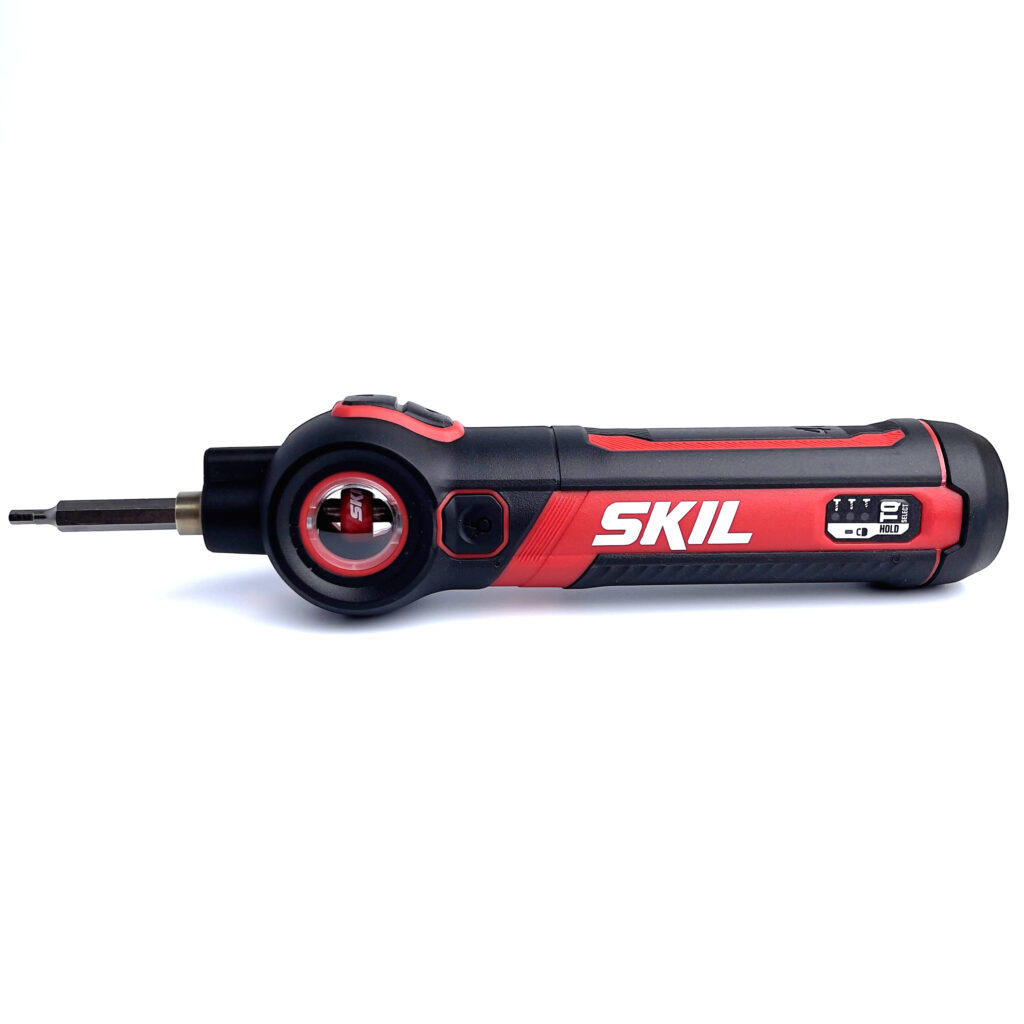
The SKIL Twist 2.0 is a rechargeable 4V cordless screwdriver in the $25–35 range. It’s aimed at people who need something more capable than a manual screwdriver for everyday tasks — furniture assembly, installing outlet covers, tightening cabinet hinges — without pulling out a full drill.
I picked this up to compare directly against the Amazon Basics 4V screwdriver (which is actually made by SKIL too, just under a different label). Same basic platform, different feature set, slightly different price. If you’re trying to decide between the two, I’ll break that down at the bottom.
Key Features
- Pivoting head – Locks at 0°, 22.5°, and 45°. Genuinely useful for getting into cabinet corners or tight electrical boxes, not just a gimmick.
- USB-C charging – Non-negotiable for me at this point. I won’t buy tools that still use Micro-USB.
- 3 torque settings – Good separation between them. More on this in the numbers below.
- LED work light – Bright and well-positioned. One of the better lights I’ve seen on a driver this size.
- 1/4″ hex chuck – Accepts standard bits. Comes with a PH2 and SL6 in the box.
Performance Testing
I test with calibrated instruments under real-world conditions — not just vibes.
RPM
Measured with a digital tachometer, standard bit installed.
| Direction | Claimed | Tested |
|---|---|---|
| Forward | 240 RPM | 225 RPM |
| Reverse | 240 RPM | 205 RPM |
Slightly under spec, but honestly at this speed range it doesn’t matter much. You’re not going to notice 15 RPM in practice. Reverse being slower than forward is pretty normal for this class of tool.
Torque
Tested on a calibrated HP-50 industrial digital torque meter. Values averaged across multiple runs.
Claimed range: 3.5–22 lb-in
| Setting 1 | Setting 2 | Setting 3 |
|---|---|---|
| 4.3 lb-in | 11.7 lb-in | 18.6 lb-in |
Setting 3 falls a bit short of the claimed 22 lb-in, but the spread between settings is good. Setting 1 is genuinely light — useful for small electronics screws where you don’t want to strip anything. Setting 3 has enough grunt to drive deck screws into soft wood, though you’ll want a real drill for anything beyond that.
Noise
Measured at exactly 3 feet, tool running full speed, quiet ambient environment.
55 dB — non-offensive, lower pitched tone. Noticeably quieter than the Amazon Basics version (62 dB). If you’re screwing together IKEA furniture at 11pm, this won’t get you in trouble.
Build Quality & Design
Materials: Rugged plastic housing with rubber grip overmold. Feels solid, not cheap. The clear viewing window on the side is a bit gimmicky — you can see the internal mechanism — but it doesn’t affect anything.
Ergonomics: Here’s my main complaint. The forward/reverse buttons sit slightly too far back on the grip. After 20 minutes of assembly work, your thumb has to stretch a bit to reach them comfortably, especially when the head is pivoted. It’s not a dealbreaker, but compared to the straight stick design of the Amazon Basics, it’s a noticeable ergonomic step back.
The pivoting head itself locks solidly. No wobble at any of the three positions.
Weight: 12.8 oz / 362g — heavier than most competitors in this class. The Amazon Basics comes in at 10.1 oz for comparison. Doesn’t sound like much, but you feel it on longer assembly jobs.
Charging: Exposed USB-C port on the bottom. Works fine, but on a jobsite or dusty workshop environment it’s going to collect debris. A small rubber cover would’ve been a nice touch at this price.
SKIL Twist 2.0 vs. Amazon Basics 4V Screwdriver
Since they’re both SKIL-made and in the same price range, this comparison comes up constantly. Here’s the short version:
| SKIL Twist 2.0 | Amazon Basics 4V | |
|---|---|---|
| Price | ~$30–35 | ~$20–25 |
| Weight | 12.8 oz | 10.1 oz |
| Torque (max tested) | 18.6 lb-in | 21.4 lb-in |
| RPM (forward) | 225 | 330 |
| Noise | 55 dB | 62 dB |
| Pivoting head | ✅ Yes | ❌ No |
| LED lights | 1 | 2 |
| USB-C | ✅ | ✅ |
The Amazon Basics is faster, has more peak torque, and costs less. The SKIL Twist 2.0 is quieter, has the pivoting head, and is better built. If you work in tight spaces regularly, pay the extra $10 for the Twist. If you mostly just need to assemble furniture and tighten screws, save the money and go with the Amazon Basics.
My personal pick is the Amazon Basics — it lives on my workbench. But the Twist earns its keep if the pivoting head is something you’ll actually use.
What It’s Good For
- Furniture assembly (IKEA, flat-pack, office chairs) — this is where it shines. The pivoting head helps reach recessed bolt holes.
- Electrical boxes — driving wire nuts and outlet screws. Light enough not to overtorque.
- Cabinet work and hinges — quiet enough for indoor use, torque is plenty for hinge screws.
- Electronics work and maker projects — Setting 1 at 4.3 lb-in is gentle enough for PCB standoffs and enclosure screws without stripping. I’ve used it on Arduino project boxes with no issues.
- Not great for: Driving screws into hardwood, anything requiring sustained heavy use, or situations where bit storage on the tool matters.
Pros and Cons
| Pros | Cons |
|---|---|
| Pivoting head is genuinely useful | Heavier than competitors (12.8 oz) |
| Quietest driver in this class (55 dB) | Buttons slightly too far back |
| Bright single LED | Peak torque falls short of claimed 22 lb-in |
| Solid torque spread across 3 settings | Exposed USB-C port |
| USB-C charging | Pricier than similar SKIL-made alternatives |
Final Verdict
The SKIL Twist 2.0 is a well-built 4V screwdriver with one standout feature — the pivoting head — that makes it genuinely better than the competition for certain jobs. The quieter motor is a nice bonus too.
That said, it’s heavier, slower, and more expensive than the Amazon Basics version, which is essentially the same platform with fewer features and better raw performance numbers.
Buy it if you work in tight spaces, need the pivoting head, or want the quietest 4V driver available.
Skip it if you mostly do straightforward assembly work and want the best value — the Amazon Basics is a better pick in that case.
Buy the SKIL Twist 2.0 on Amazon
Also reviewed: Amazon Basics 4V Cordless Screwdriver
Frequently Asked Questions
Is the SKIL Twist 2.0 worth the extra cost over the Amazon Basics? If you’ll use the pivoting head, yes. If you just need a basic stick screwdriver for furniture assembly and light repairs, the Amazon Basics does the same job for $10 less and actually has better RPM and peak torque.
What bits fit the SKIL Twist 2.0? Standard 1/4″ hex bits. The two included bits (PH2, SL6) cover most common tasks. Any standard 1″ or 2″ hex bit will work.
Can the SKIL Twist 2.0 drive screws into wood? Yes, for softwood and pre-drilled holes. At 18.6 lb-in tested torque on setting 3, it’ll handle cabinet screws and small wood screws fine. Don’t expect it to drive 3″ construction screws — that’s not what it’s for.
How long does the battery last? SKIL doesn’t publish a cycle count, but in my testing a full charge handles a typical furniture assembly project (30–50 screws) comfortably. USB-C means you can top it off from a phone charger.
Is the SKIL Twist 2.0 good for electronics or maker projects? It works well. Setting 1 at ~4.3 lb-in is light enough for M3 screws and PCB standoffs. The pivoting head helps in tight enclosures. It’s become one of my regular bench tools alongside the Amazon Basics.
Review unit purchased by ToolVerdict. No affiliate relationship with SKIL. Amazon links support the site at no cost to you.

- PIVOTING HEAD WITH LOCK OFF – Pivots and locks between three positions (0, 22.5, and 45 degrees) for improved ergonomics…
- FORWARD & REVERSE TRIGGER BUTTON – Conveniently located for easy one-finger use
- TORQUE SETTING CONTROL – Adapt to the application at hand with three torque settings